
History of trade mark registration
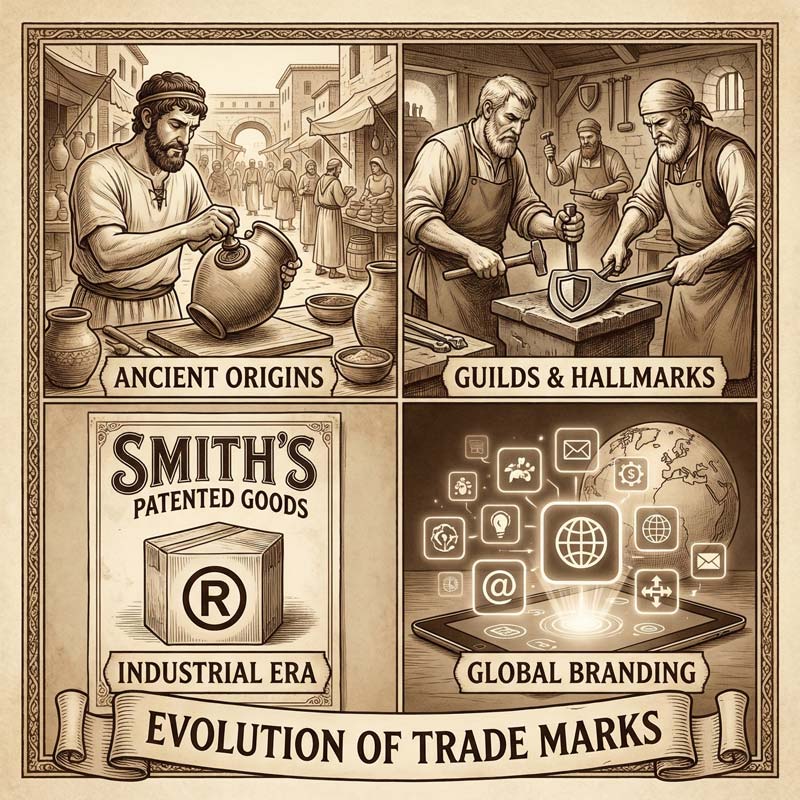
The style adopted by our own branding refers to “trademarks” as a single word but the Act of 1994 in the UK uses two words as in “trade marks”. This is a US/UK preference and just to complicate the issue further, Canadians prefer the hyphenated version of “trade-marks”.
During the nineteenth century, many products sold in the UK were of dubious quality and fair traders would suffer by being undercut by less scrupulous traders selling inferior, contaminated and sometimes dangerous products. Trade Marks were adopted as a means of identifying the source of the product (and later services). The Registration system provides for swift action to be taken against those trading counterfeit products.
Thus, it is important to note that the trade mark identifies the source of the product and not the nature or quality of the product itself.
With the resources available in the nineteenth century, searching to locate existing registrations could be difficult. To make this process less burdensome, the register was divided into separate Classes. This was later agreed internationally resulting in the Nice classification system of thirty-four classes for goods and a further eleven service classes. Computers and software are proper to class 9, coffee is proper to class 30 and programming is proper to class 42. The selection of classes and wording for the respective specifications must be given careful consideration. For example, are you selling software (class 9) or providing a programming service (class 42).